A Wedding at Samskara Jaipur: Where Orchards Meet Celebration
On hosting a celebration that unfolds over days, not hours—within seven acres of amla orchards, thirty minutes from the Pink City.
Samskara ResortsFebruary 202510 min read
Updated 13 October 2026
The weddings we remember aren't defined by their grandeur alone. They're defined by presence—by the rare feeling that everyone you love is together, unhurried, in a place that feels both special and somehow like home. At Samskara Jaipur, this is what we've tried to create: a setting where celebrations unfold naturally over days, where guests wander between functions through orchard paths, where the boundaries between ceremony and gathering dissolve into something more continuous and intimate.
Explore wedding venues at Samskara Jaipur for venue details and enquiries, then read on for the orchard setting, guest accommodation, and flow of a multi-day celebration.
At a Glance
Property7 acres of amla orchards
Accommodation50 rooms across 7 styles
Indoor Capacity400 guests (Bodhi Banquet)
Outdoor Capacity800 guests (Banquet Lawn)
Distance from Jaipur30 minutes from city centre
Best SeasonOctober – March
The Setting: Why Place Matters
Jaipur has long drawn couples seeking destination weddings—the Pink City's royal heritage, its amber forts and marble palaces, all speak to celebration on a grand scale. But there's another way to approach a Jaipur wedding: not within the city itself, but just beyond it, where the landscape opens into something quieter.
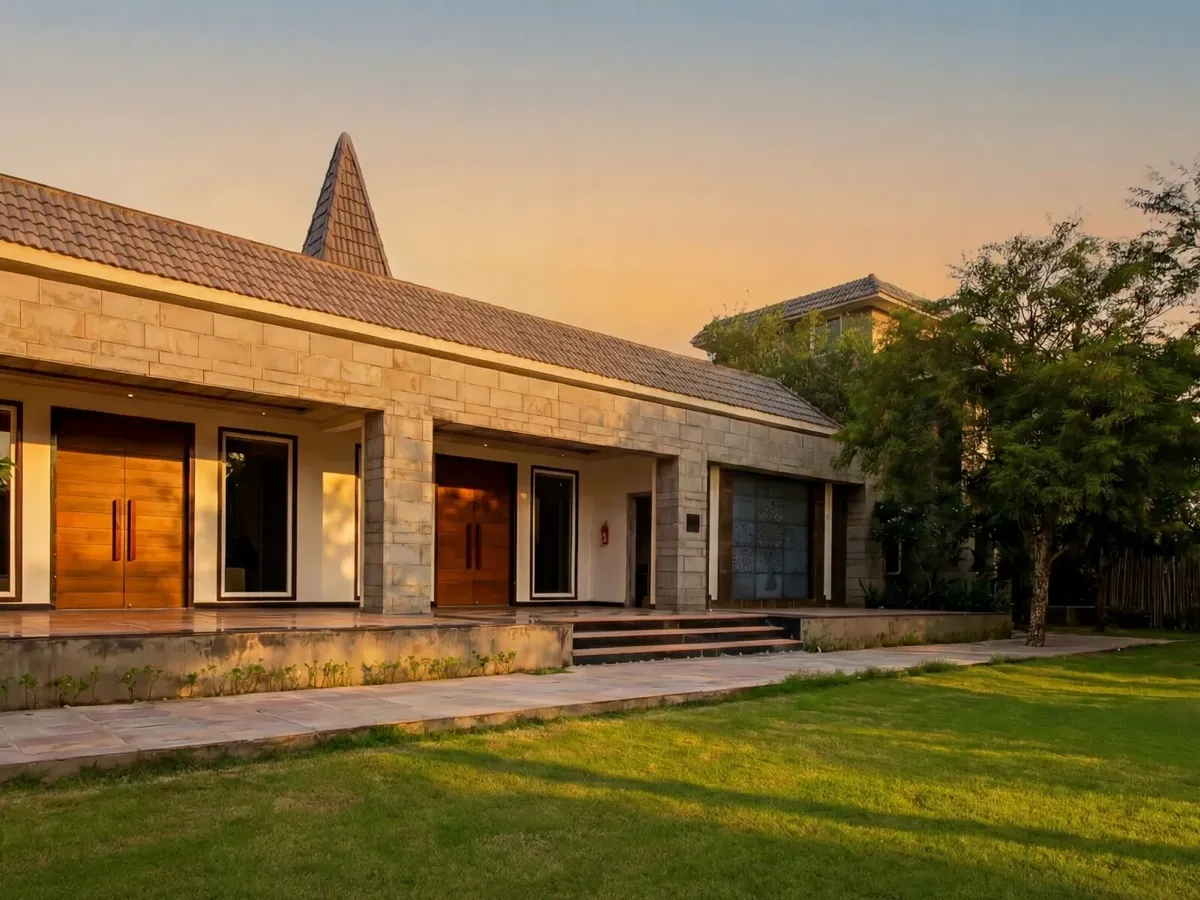
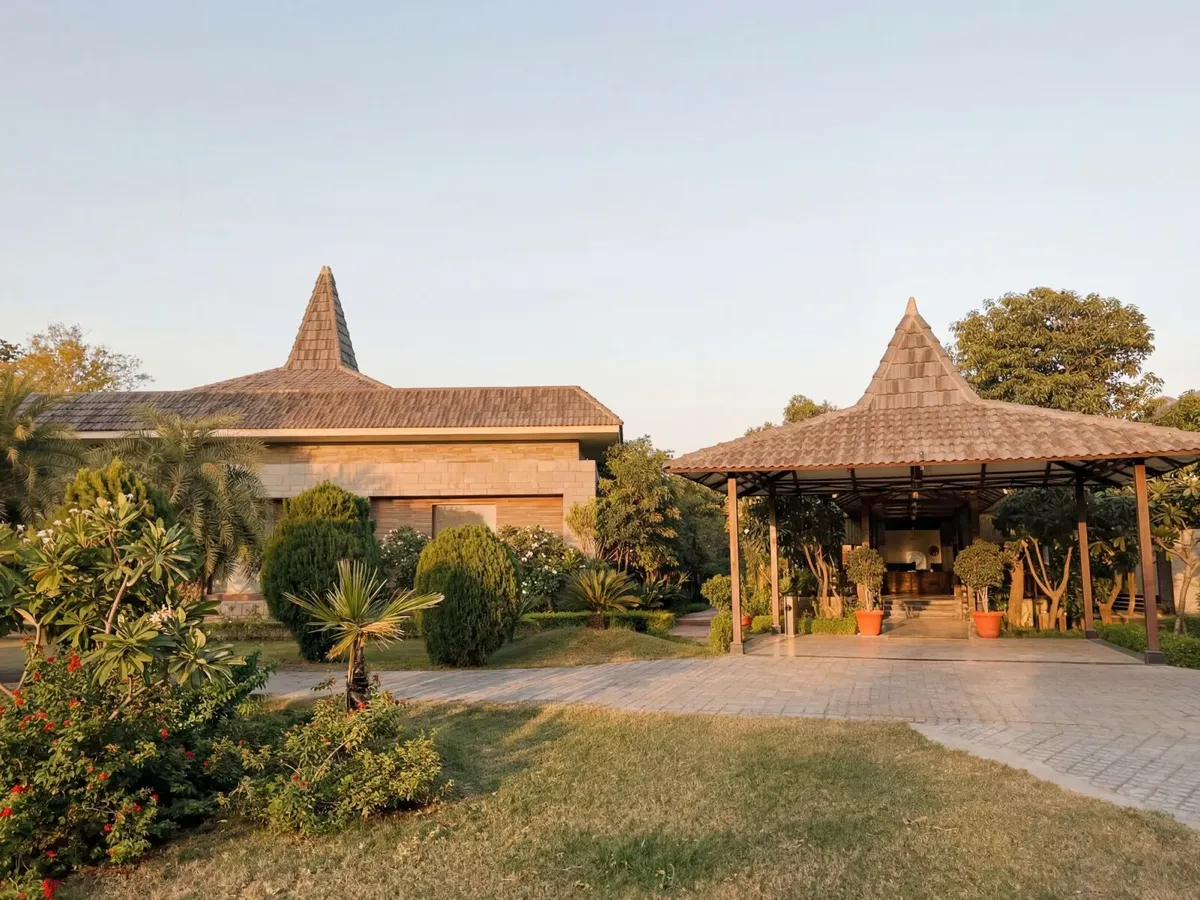
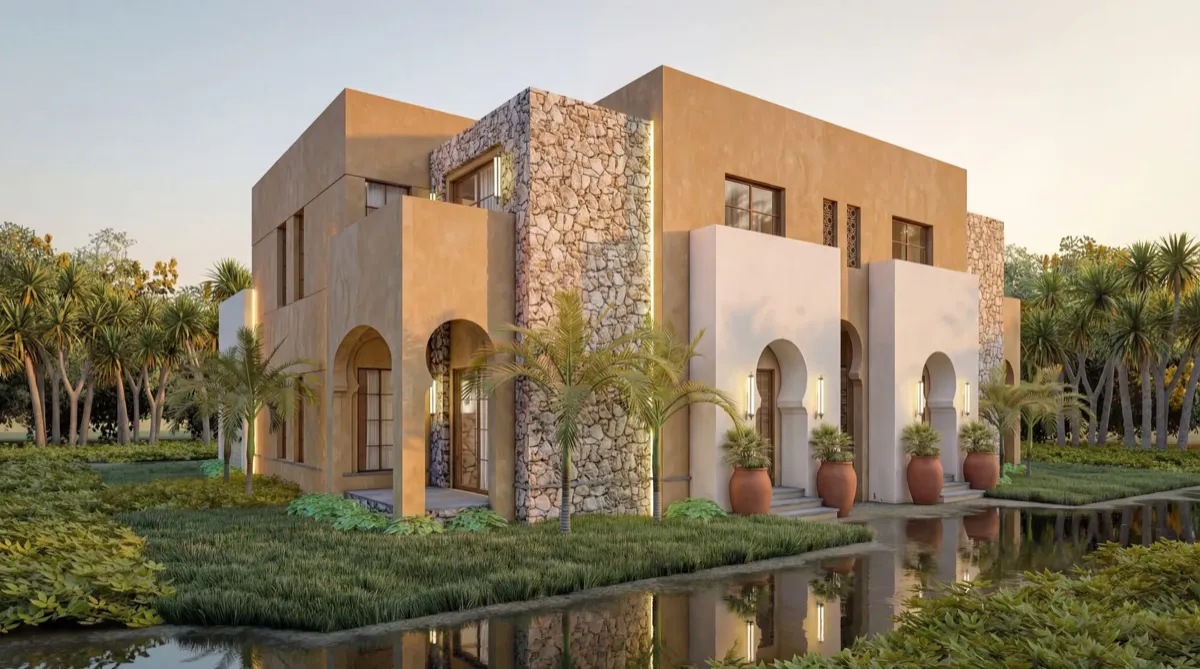
Samskara sits in the village of Peepla Bharatsingh, fifteen kilometres from the airport and twenty from Hawa Mahal. The drive takes you past the city's edges into agricultural land, and then, through a modest entrance, into seven acres of amla orchards that have stood here for decades. The trees create a natural canopy throughout the property—their presence shapes everything, from the quality of light to the sense of enclosure and privacy.
This is different from a city hotel, where your wedding occupies a ballroom while other guests check in and out around you. Here, when you book for a celebration, the property becomes yours. Your guests can walk from their rooms to the pool to the ceremony lawn without ever leaving a world that belongs, for those few days, entirely to your family.
The Bodhi Banquet opens onto landscaped lawns—ceremonies often flow between indoor and outdoor spaces as the evening progresses
"We wanted our families to actually spend time together—not just attend events. By the third day, cousins who'd never met were inseparable."
— A recent wedding family
Spaces for Every Function
Indian weddings are never singular events. They're sequences of gatherings, each with its own character—the intimacy of mehndi, the energy of sangeet, the solemnity of pheras, the joy of reception. We've designed Samskara's spaces with this rhythm in mind, so each function can have its own setting while the celebration remains contained within a single property.
Up to 400 Guests
Bodhi Banquet
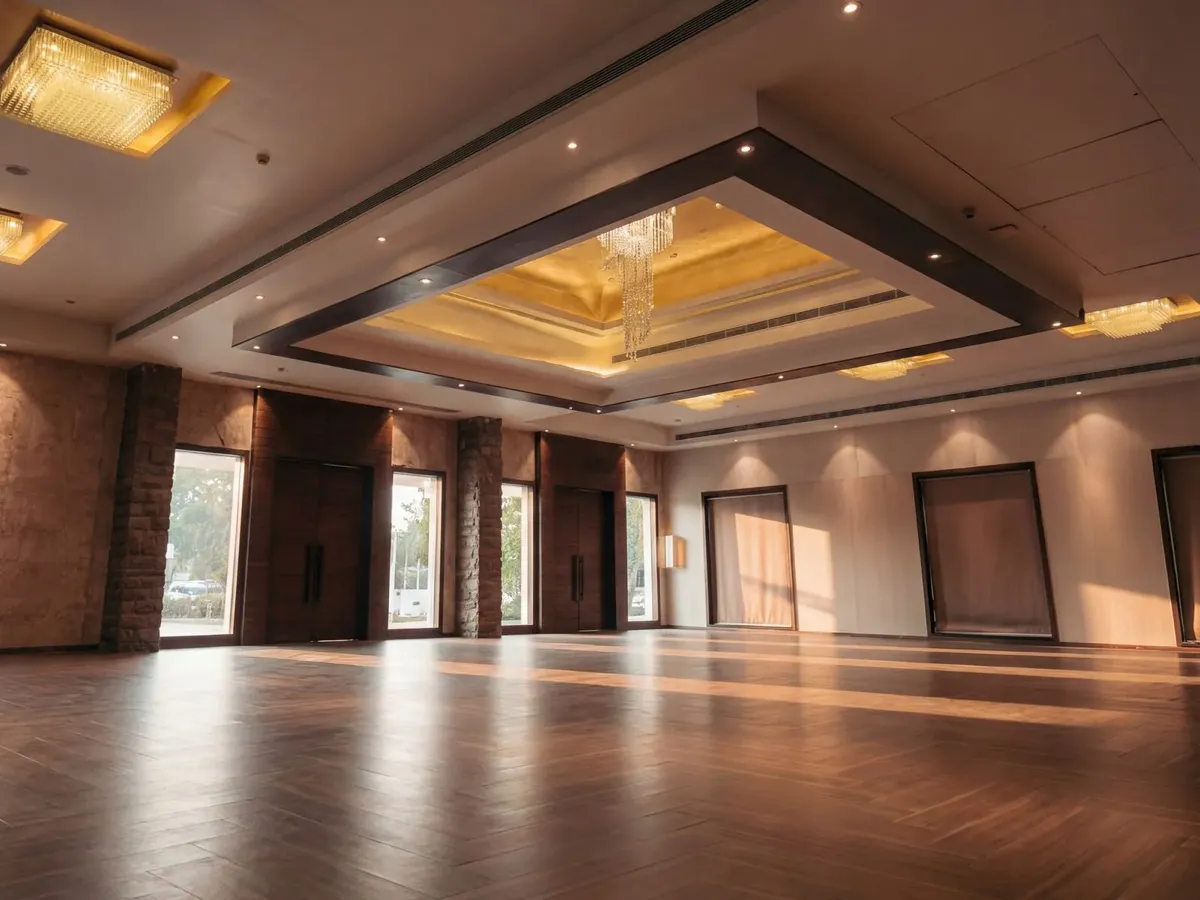
High ceilings, climate control, and acoustics designed for both live music and speeches. The hall's neutral palette means décor teams can transform it completely—we've seen everything from traditional mandaps to contemporary minimalism. For summer or monsoon weddings, this becomes the heart of the celebration.
Up to 800 Guests
The Banquet Lawn
Over two acres of open lawn—the largest wedding space on the property. Rajasthan's winter nights are made for outdoor weddings, and the Banquet Lawn accommodates traditional mandap setups, reception seating, and sangeet stages at grand scale. In the late afternoon, the light here turns golden through the surrounding trees.
Up to 250 Guests
The Hotel Lawn
A second open-air lawn beside the hotel, suited to ceremonies, sangeets, and outdoor dinners—or as the daytime setting while the Banquet Lawn is dressed for the evening's main function.
Up to 200 Guests
Villa Anoushka Private Lawn
The private lawn attached to our signature villa. Ideal for functions that stay close to family—haldi mornings, mehndi afternoons, or an intimate reception where the couple's villa is steps away.
Up to 100 Guests
Pool Deck
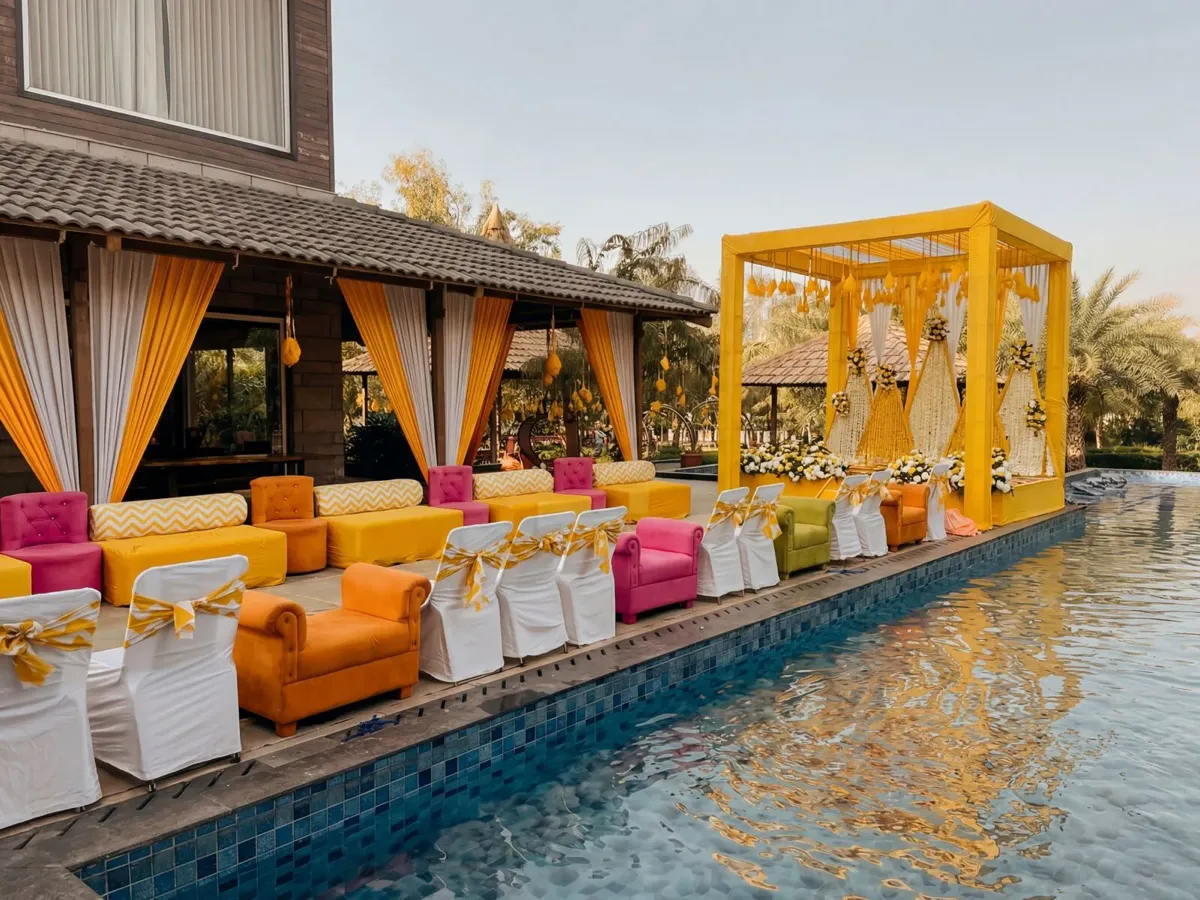
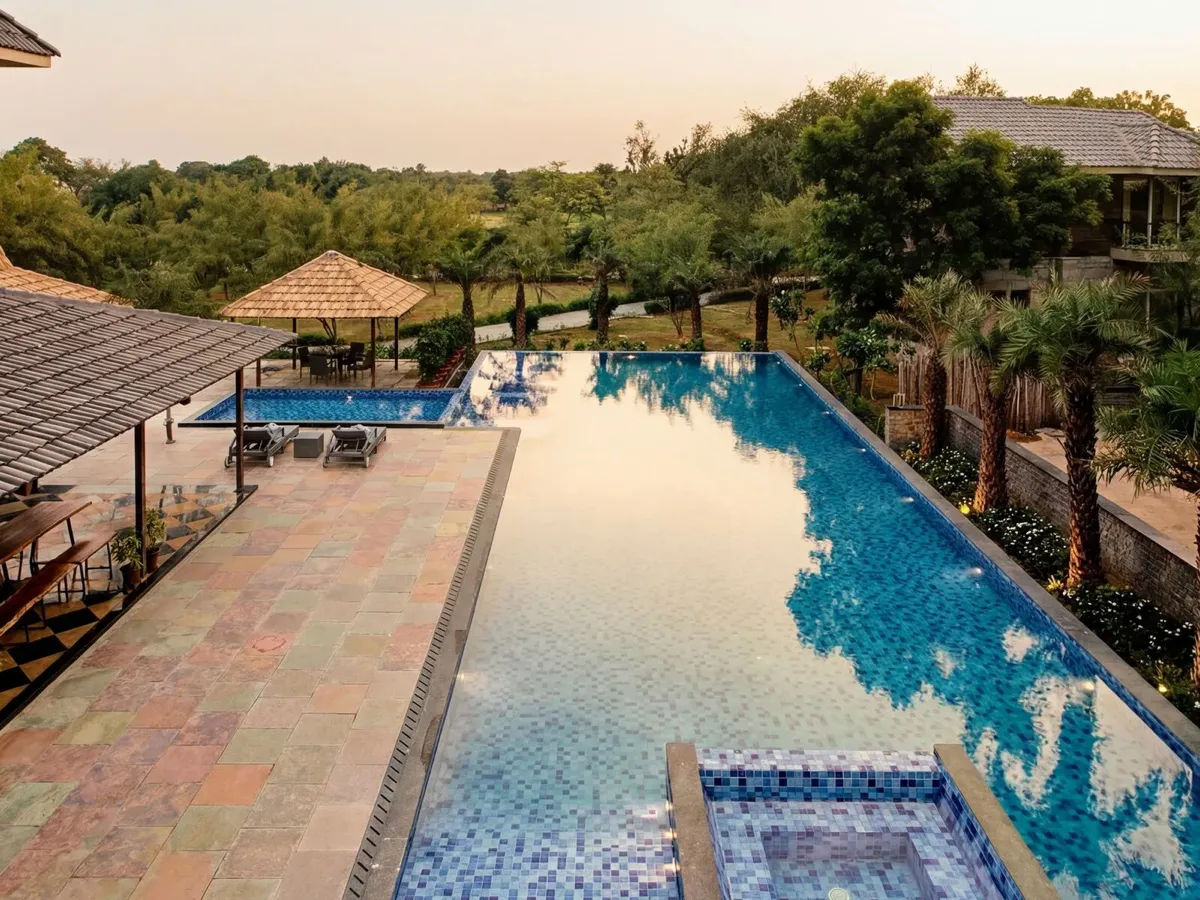
Beside the 10,000 square foot infinity pool, this space works beautifully for mehndi ceremonies, cocktail evenings, or the kind of informal gathering that happens organically when families are together. There's something about water that encourages people to linger.
Up to 100 Guests
Karma Cafe
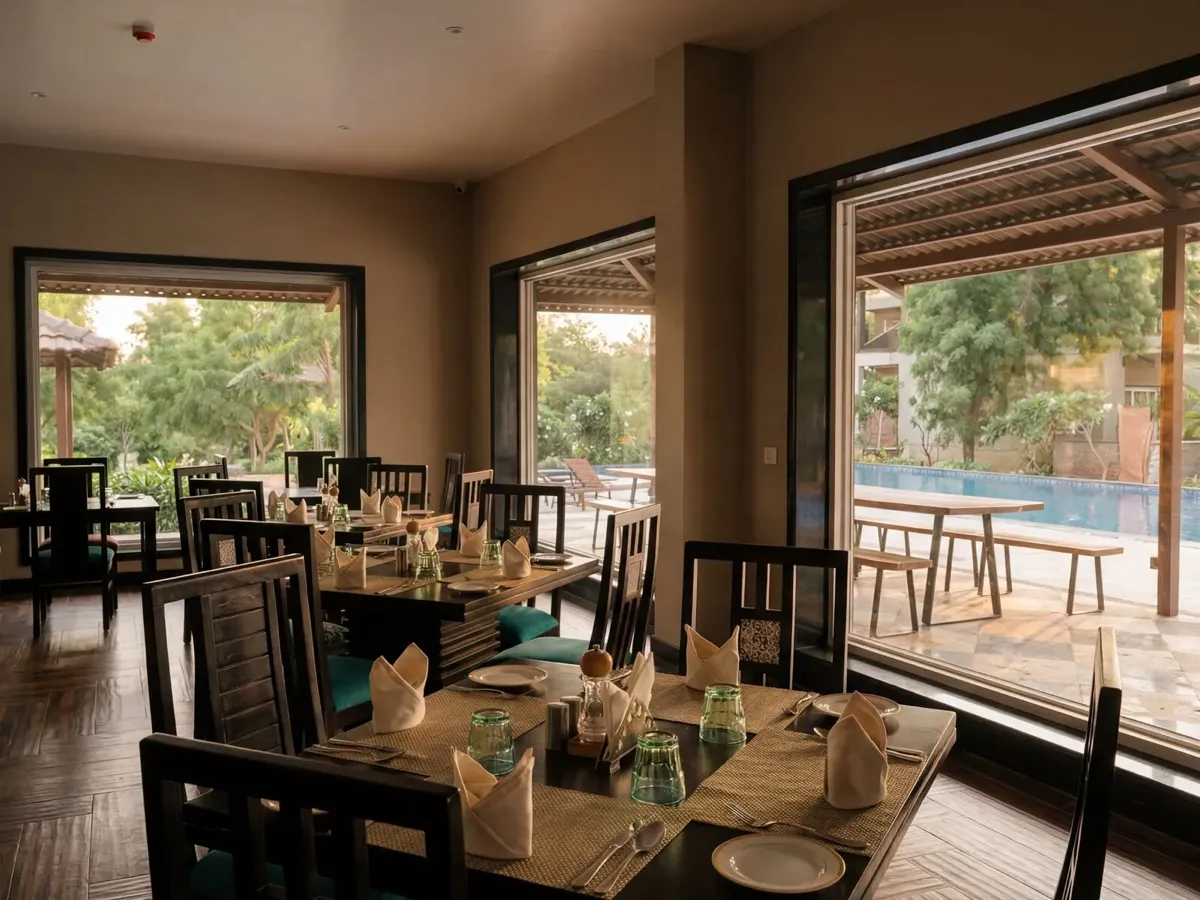
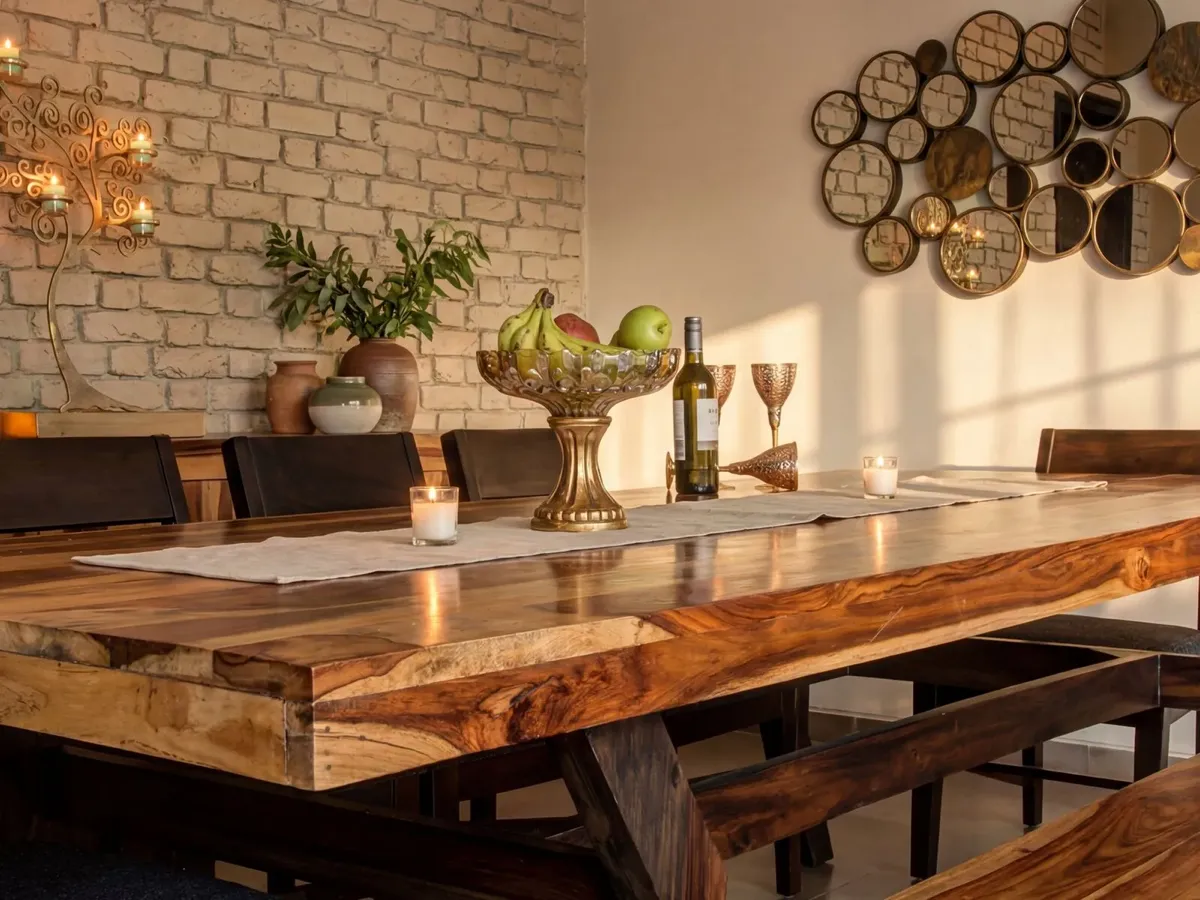
For intimate family dinners—the kind where grandparents and cousins sit together over a long meal. The restaurant can be reserved entirely for welcome dinners, day-after brunches, or any gathering where conversation matters more than spectacle. The Sunken Courtyard nearby hosts up to 50 for tucked-away ceremonies and cocktail evenings.
Every Function Finds Its Place
Multi-day celebrations have a natural rhythm. We've tried to create spaces that support each moment, from the most intimate to the most expansive.
MehndiSangeetHaldiPherasReceptionCocktailsVidaai
Staying Together: The Value of Proximity
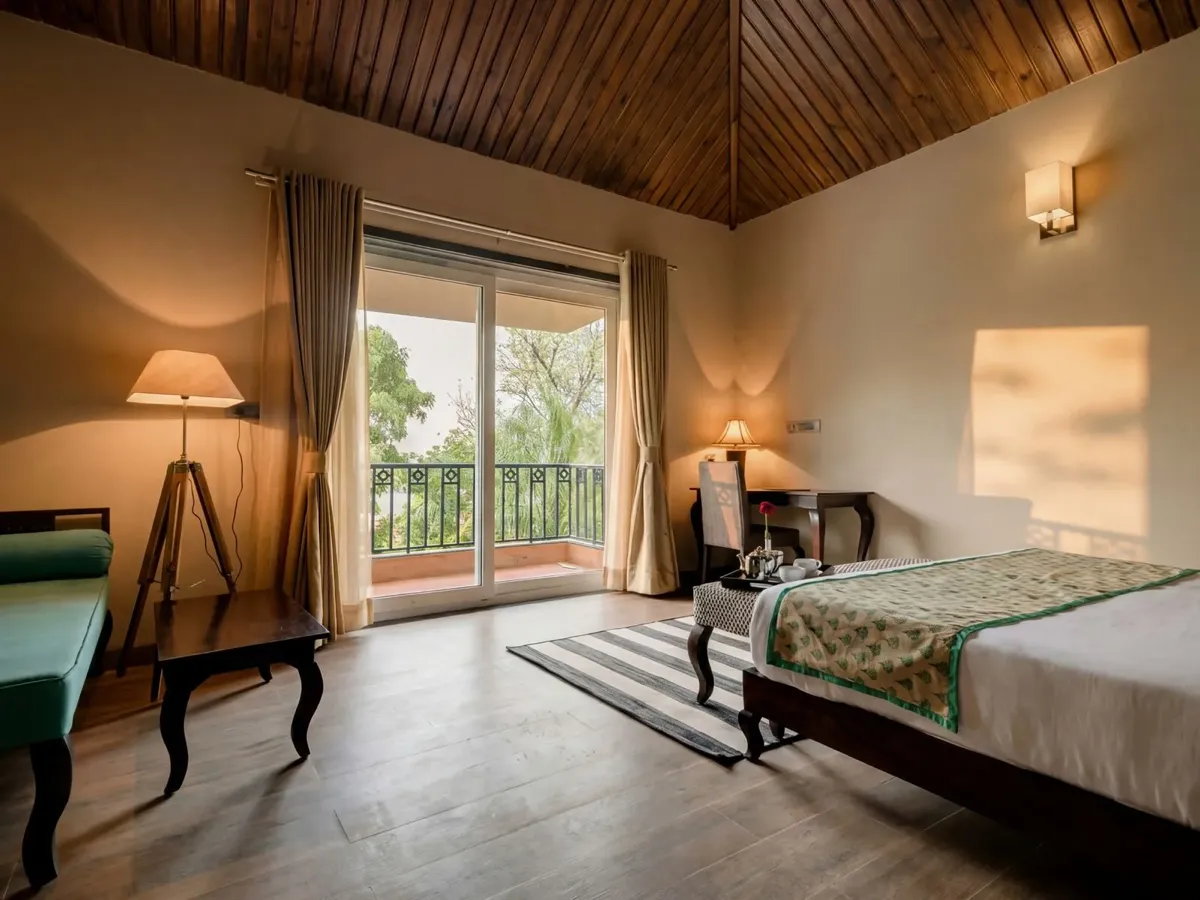
One of the quiet advantages of celebrating here is accommodation. With fifty rooms across seven distinct styles, most wedding parties can house everyone on-property. This changes the nature of a destination wedding fundamentally—guests aren't commuting between events, they're living within the celebration.
Children run between rooms to find their cousins. Elders can retreat to their quarters when they need rest, then rejoin easily. The morning after late-night dancing, everyone gathers for breakfast together. These unplanned moments—the conversations by the pool, the walk to the ceremony through the orchards—often become what people remember most.
Accommodation
Rooms
From
Kothi Heritage Rooms
13
Wedding packages only
Luxury Rooms
16
₹7,219/night
Cottage Villa with Bathtub
14
₹9,588/night
Cottage with Plunge Pool
4
₹16,225/night
Villa Ananya — 4 bedrooms, private garden
1
₹40,120/night
Villa Anoushka — 3 bedrooms, private pool
1
₹44,250/night
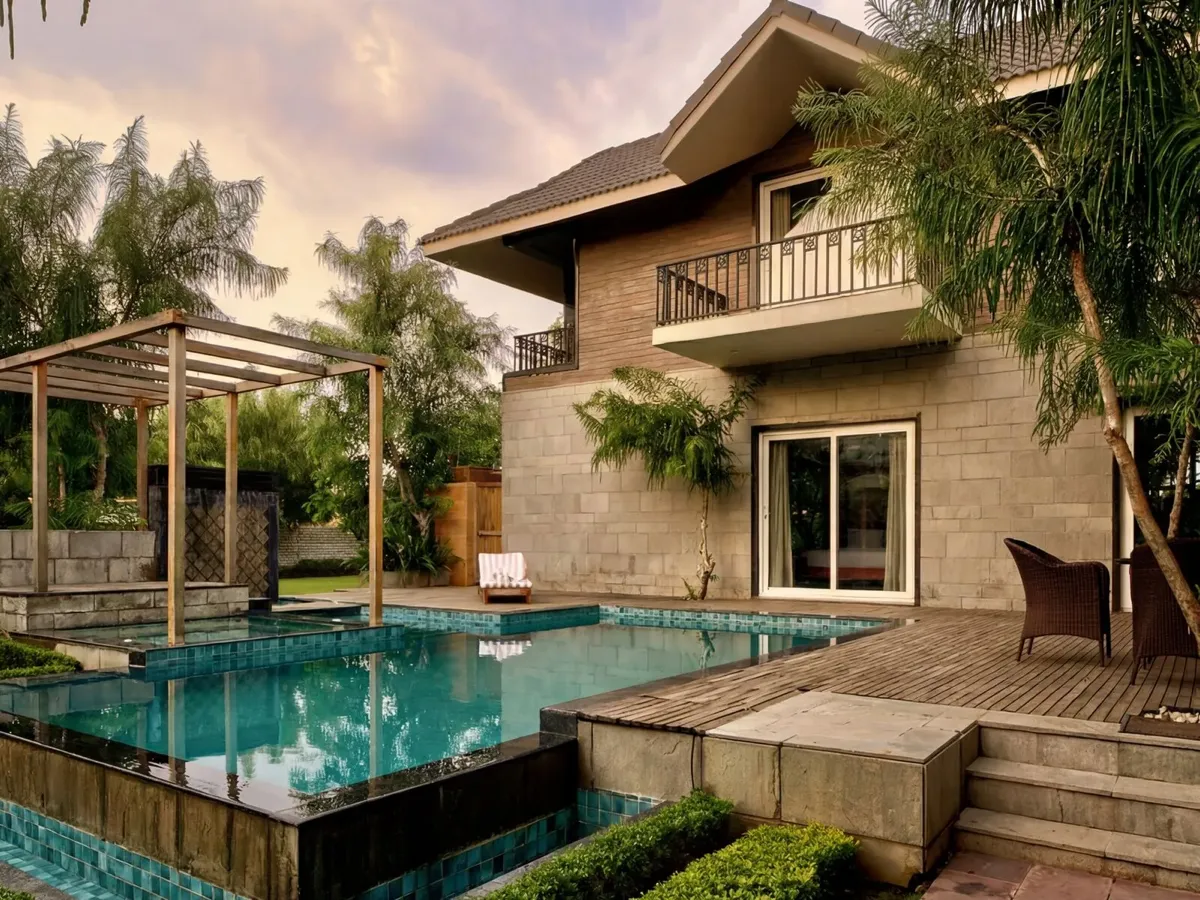
For the couple themselves, Villa Anoushka offers a private retreat—three bedrooms, a private infinity pool, lawn, and complete separation from the rest of the property. It's a place to escape between functions, to have a quiet morning before the ceremonies begin. Similarly, Villa Ananya works well for the groom's family or close relatives who want more space while remaining on the grounds.
How Celebrations Come Together
We work with families early—often six to twelve months before the wedding—to understand what they're hoping to create. Some come with detailed plans; others know only that they want a destination wedding in Rajasthan and are starting from scratch. Both approaches work.
Our events team handles the coordination that makes multi-day celebrations possible: venue setup and transitions between functions, accommodation assignments, catering across multiple meals and dietary requirements, and the logistics of traditional ceremonies. Many families bring their own wedding planners, decorators, and photographers; we work alongside them. Others prefer us to recommend trusted vendors we've collaborated with before.
What We Handle
Dedicated events coordinator
In-house catering team
Venue setup and breakdown
Sound and lighting coordination
Mandap and décor coordination
Traditional ceremony arrangements
Guest transportation
Accommodation management
On Food
Over a multi-day wedding, guests eat many meals together—and the quality of those meals matters enormously. Our culinary team prepares extensive menus spanning North Indian, South Indian, Continental, and Chinese cuisines. We can accommodate vegetarian, Jain, and other dietary requirements with advance notice. For late-night functions, we've learned that chaat counters and chai stations are often as appreciated as the formal dinner.
Seasons and Timing
Rajasthan's wedding season runs October through March, and for good reason. These months bring mild temperatures, clear skies, and evenings comfortable enough for outdoor celebrations. Within this window, November through February is peak season—dates book early, particularly around auspicious muhurats.
Seasonal Considerations
Oct – NovPost-monsoon freshness. Orchards are lush, temperatures are comfortable but can still be warm during the day. Good for evening ceremonies.
Dec – FebPeak season. Cool evenings, clear skies, ideal photography conditions. The most sought-after dates—book well in advance.
MarWarming temperatures but still manageable. Holi falls in this period, which some families incorporate into their celebrations.
Apr – JunHot season. Outdoor ceremonies require early morning or late evening timing. Bodhi Banquet's climate control becomes essential. Better availability, often more competitive pricing.
Jul – SepMonsoon. Celebrations move primarily indoors. The orchards are at their most verdant. Fewer weddings, which can mean more personalised attention.
"We chose January specifically for the outdoor pheras. That moment—exchanging vows beneath the stars, surrounded by everyone we love—was worth planning an entire year around."
— A bride from the 2025 season
Beginning the Conversation
If Samskara sounds like the right setting for your celebration, we'd suggest reaching out early—particularly for peak-season dates. Our team can arrange site visits, share detailed venue layouts, and begin shaping a proposal around your guest count and requirements.
Every wedding here is different. Some families want traditional Rajasthani ceremonies with all the elements they remember from their own childhoods. Others are looking for something more contemporary. What remains consistent is the setting—those seven acres of orchards, the sense of seclusion and togetherness, the feeling that for a few days, this place belongs entirely to your celebration.
Questions
Common Questions About Weddings at Samskara
The Banquet Lawn hosts up to 800 guests across more than two acres for outdoor ceremonies and receptions, and the Bodhi Banquet seats up to 400 guests indoors with full climate control. We've hosted weddings ranging from intimate gatherings of 50 to large celebrations using multiple spaces.
With 50 rooms across six accommodation styles, approximately 100-150 guests can stay on-property depending on room configurations. Many families appreciate having everyone in one place—it transforms the logistics of multi-day celebrations.
Jaipur International Airport is 15 km away—roughly 20 minutes by car. The city centre is 20 km, about 30 minutes. Close enough for convenience, far enough that the property feels like its own world.
Yes—mandap setups, traditional decorations, pandit arrangements, and phera ceremonies are all part of what we coordinate regularly. Both the lawn and Bodhi Banquet work well for traditional North Indian and Rajasthani wedding functions.
Yes—and you can also bring your own. Our culinary team handles all meals throughout multi-day celebrations—from elaborate wedding feasts to breakfast spreads and late-night chaat counters—and we accommodate vegetarian, Jain, and special dietary requirements with advance notice. Outside catering is equally welcome: many families bring caterers they trust for wedding functions, or combine the two.
October through March is peak season—particularly November to February when evenings are cool and skies are clear. Summer and monsoon weddings are possible too, with celebrations centred around the climate-controlled Bodhi Banquet.
For peak-season dates (November-February), we recommend reaching out 6-12 months in advance. Auspicious muhurats book particularly quickly. Off-season weddings often have more flexibility.